
Our Method of Beekeeping
Autumn
Hive Configuration
Image: 1
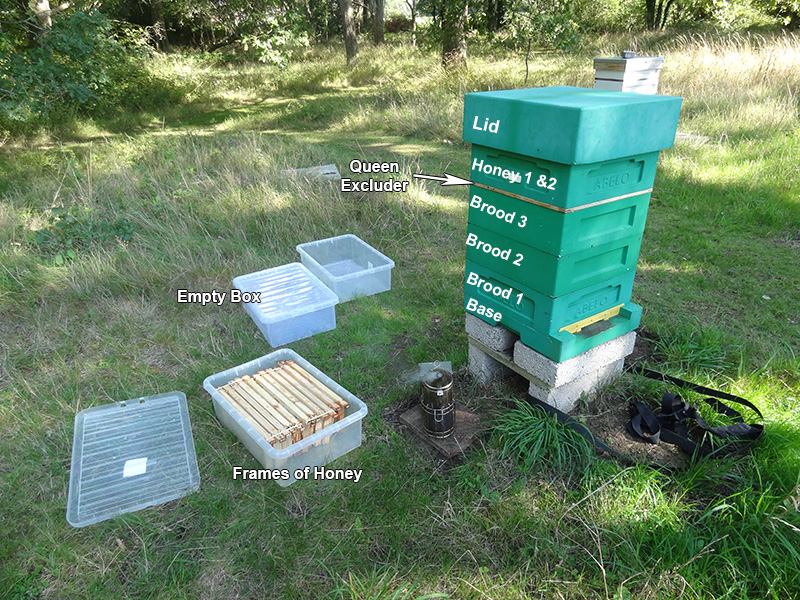
It is now late September and we are preparing the hives to go through winter.
Image 1 is how we left the hive in late summer. The results from the underfloor trays provides good news because all hives have a very low varroa count therefore we have decided not to medicate any of our hives.
Image: 2
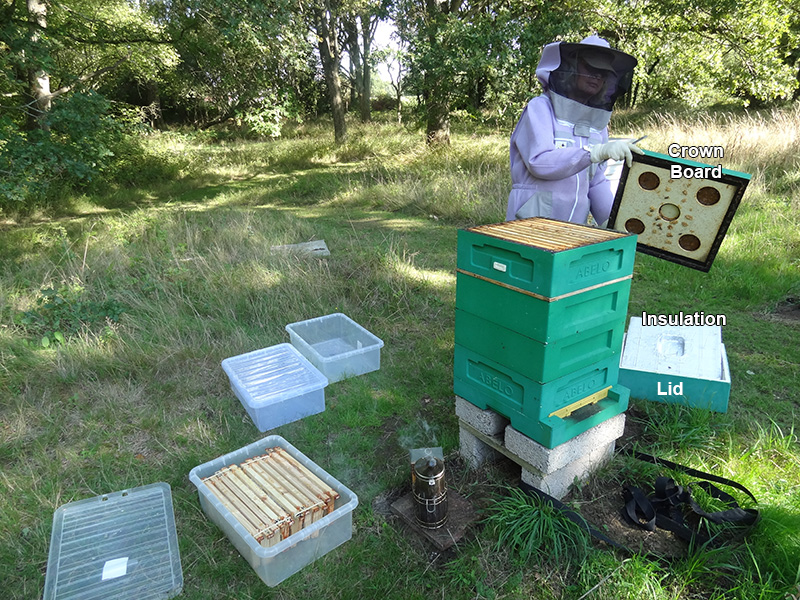
We start by removing the lid, insulation and crown board.
Image: 3
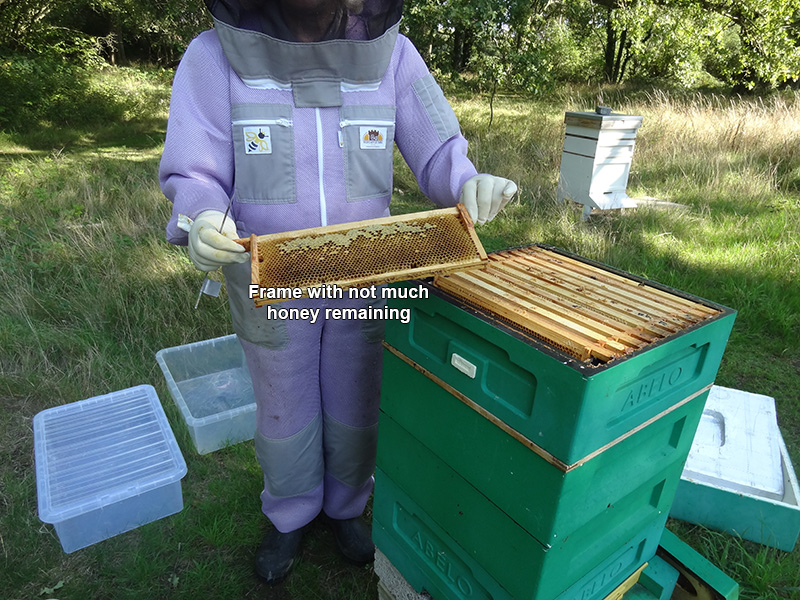
We inspected the top box frames to see how much honey there is in their store. Each frame is checked for honey content. Any frames found to be light are placed in an empty plastic box. All of these frames will be placed in the freezer for two days to kill any wax month lava and then stored in sealed plastic boxes for the next season. These frames will be used in spring (see: https://localhoneysales.co.uk/our-method-spring/#change-frames) to boost the colony growth.
Image: 4
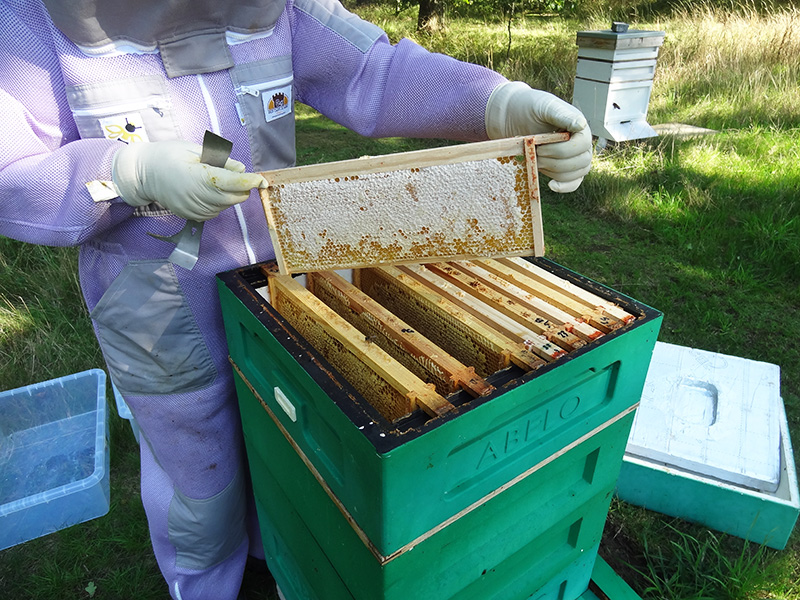
Any frames that are removed are replaced with full frames of honey which we have saved for winter feeding.
The intention is leave the top box in the stack full of honey (around 10 to 12kg of honey) as we believe that the bee’s own food is best for them. This amount of honey is not sufficient for them to get all the way through autumn and winter and so we will supplement this food with bee fondant in the winter months (see: https://localhoneysales.co.uk/our-method-winter/#fondant-containers).
Building the Autumn Hive Stack
Image: 5
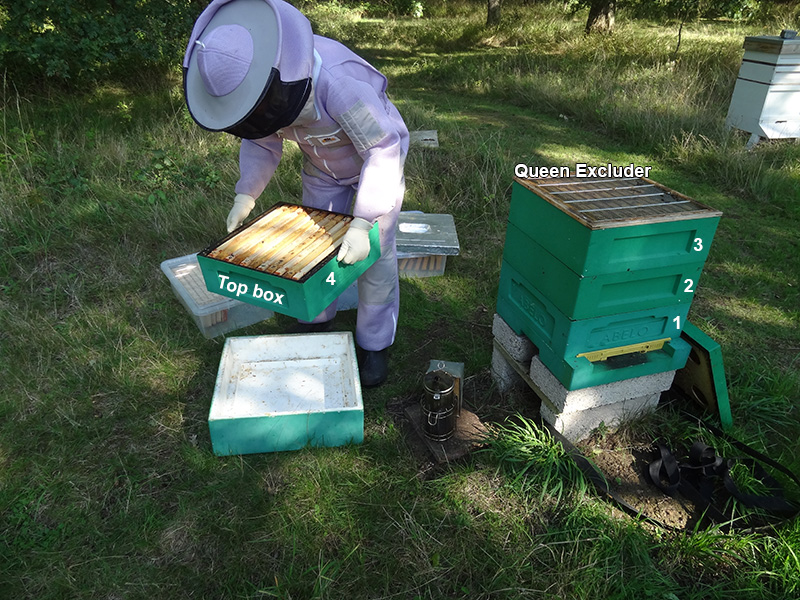
Remove the top box – which is now full (almost) with frames of honey.
Image: 6
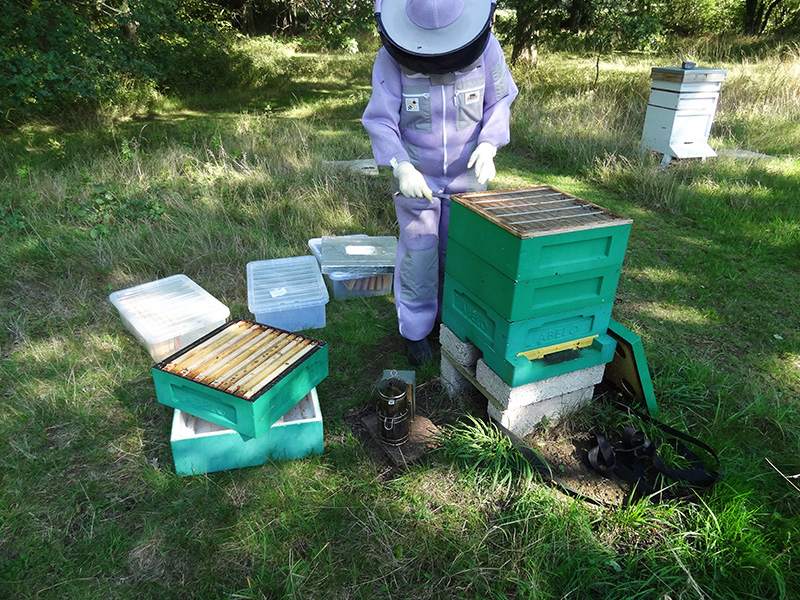
Remove the queen excluder.
Image: 7
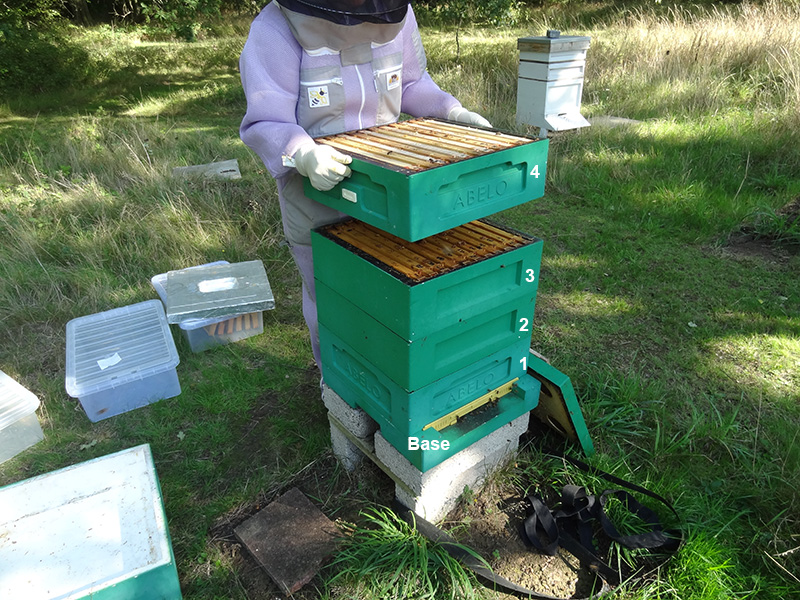
Place the top box (4) on the remaining hive stack.
Image: 6
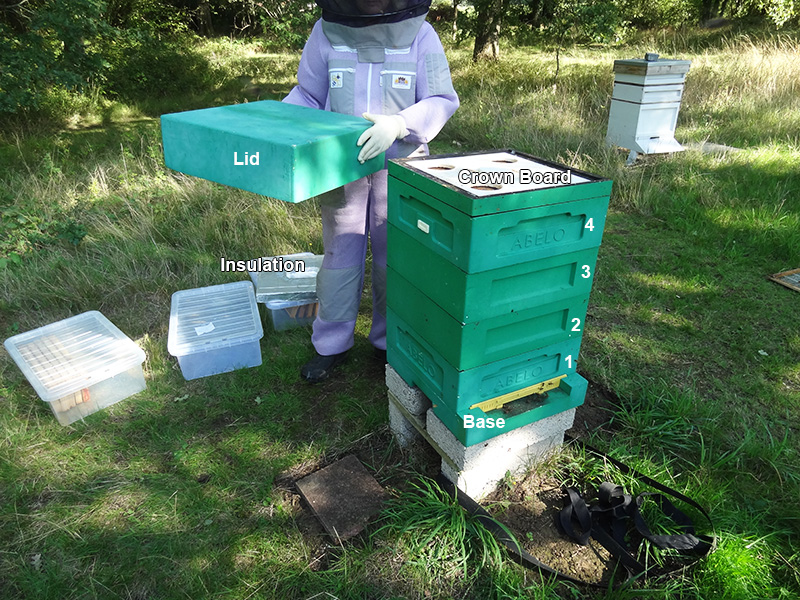
Complete building the hive stack with crown board, insulation (forgotten in image!) and lid. The bees now have four brood boxes with the top box full of stores to see them through autumn and most of winter. As they consume their stores they can move upwards away from the hive entrance and the cold just as they would if they were in their natural hive (e.g. a hollow tree).
Hefting the Hive Stack
Image: 9
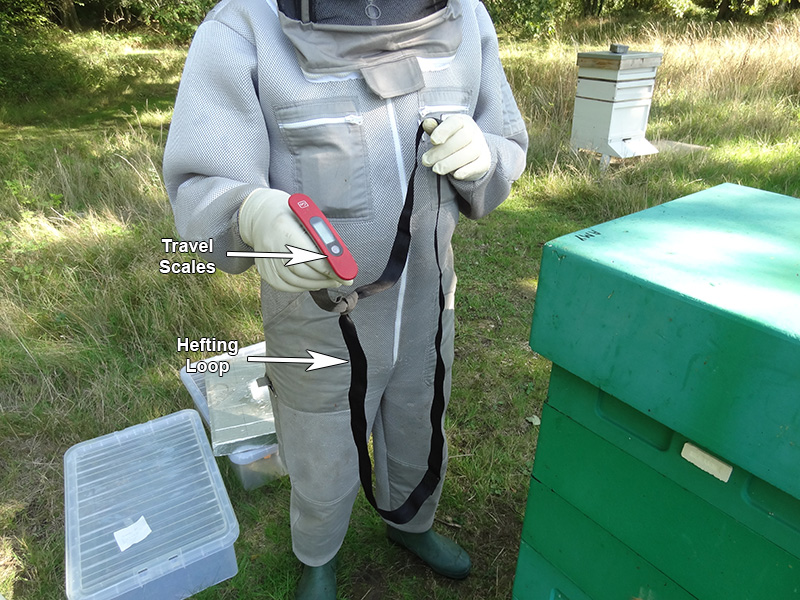
Once the hive stack has been rebuilt we need to get a starting weight so that we can, without going inside the hive, ascertain how fast the bees are using their stores. We do this by making a measurement using travel scales and a hefting loop.
Image: 10
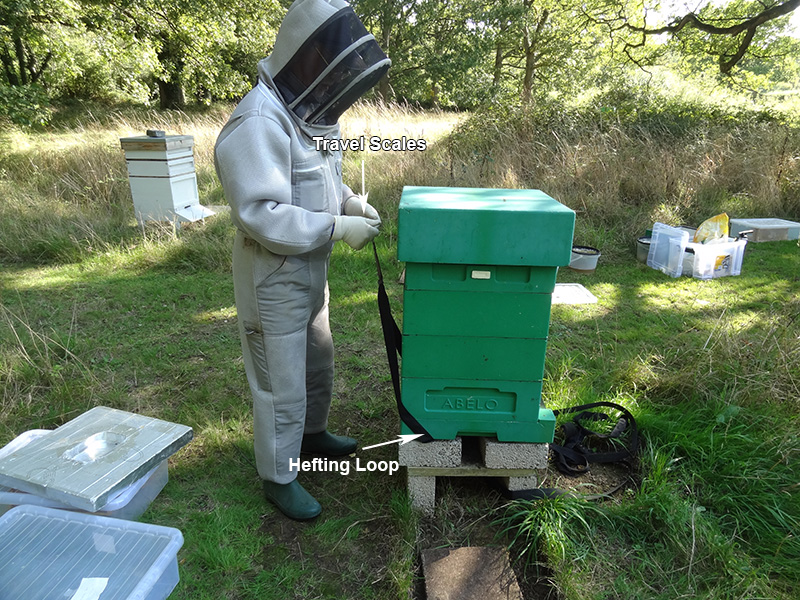
We place the loop around the back of the hive and lift it up by pulling upwards on the travel scales so that the hive just tips forward. This reading is recorded. We will return approximately once a month to re heft the hive and compare measurements. Once the weight has gone down by around 4-5kg we know that the bees have consumed most, if not all, of the stores we left them with, so now is the time to start supplementary feeding of fondant.