Our Method of Beekeeping
If you are new to beekeeping or beekeeping is simply a passing interest you will often hear the phrase “bees don’t read books” when you are struggling to work out what is going on in a colony.
Our view is there is no one right way of looking after bees but there are certainly plenty of wrong ways. Your best start would be to join a local beekeeping association where you will get a huge variety of opinions and experience in handling bees before any major purchases.
We are publicising OUR method which is a mash up of different practices we have experienced from beekeepers we have been trained by, worked with or have listened/watched their recorded methods.
As ethical beekeepers our beekeeping starts with treating our bees with the utmost respect and to try, as best as we can, to work with their rhythms and natural urges. We try and do this with the minimum amount of equipment and disturbance to the bees.
First we must declare that although we mention and use commercially available products, we receive absolutely no sponsorship from these companies to promote their products.
Overview
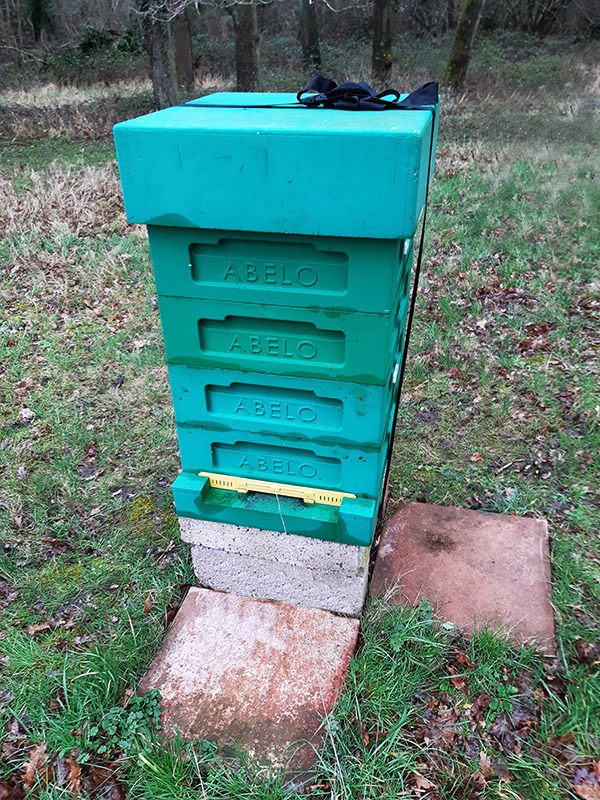
To set the scene for our beekeeping, we currently have three Abelo national polystyrene hives and currently one Paynes poly nuc. It is our opinion that poly hives and nucs are a better option than wooden hives as they provided better protection from heat, cold and damp conditions. All of which, with climate change becoming more extreme, are important properties.
We only use shallow boxes and self spacing Hoffman frames. If you have ever tried to pick up a deep box (usually used for brood) which has a lot of honey in it you realise how heavy they are. Picking up heavy boxes (deep or shallow) can lead to back problems – often referred to as “beekeepers” back. We have no intention of doing any physical harm to ourselves. Furthermore having one type of box (shallows) and one type of frame simplifies our beekeeping.
Words of Wisdom
We greatly appreciate the information provided in the YouTube video called Reading a Hive by Kirsten Traynor and you will find as you work through these pages how we have applied the information Kirsten has so graciously supplied. To any beekeeper reading this page – this video is well worth 52 minutes your time.
Our Yearly Cycle
As you will see we have divided the detailed information into the four seasons starting with winter. If you look at the pdf we have provided you will see that the hive configuration starts with four shallow boxes in winter. As Kirsten says as soon as the daffodils “start popping” we will remove the bottom brood box (which will be empty), place on the top box a queen excluder and the first honey super box.
As the bees start to fill the first honey super box we will add a second box and “checker board” filled frames with empty frames across the two boxes.
From then on we keep up the process of removing frames, processing the honey and returning wet frames for the bees to refill.
Come the end of the honey season, probably the last few days of August, we will remove the queen excluder, consolidate both honey supers into one (so now one box with 11 full frames of honey) and apply varroa strips for treatment of this mite. These strips will then be removed in ten weeks (approx mid November). Then we are back to the winter configuration and feeding fondant.